Loading...
Serving Pico Rivera, CA and surrounding areas. (562) 271-1480
Your slab is sinking and your floors show it. We lift sunken concrete back to level - without tearing up your home - and pull every permit the city requires.
Foundation raising in Pico Rivera lifts a sunken or uneven concrete slab back to its original level position by pumping material into the void underneath - most residential jobs are finished in one to two days with no need to leave your home. The holes drilled for the lift are patched flush when the crew is done.
If you have noticed sloping floors, sticking doors, or gaps forming between your walls and the ceiling, your slab has likely been moving for a while - and in Pico Rivera, where clay-heavy soils expand in the winter rains and shrink in the summer heat, that cycle does not stop on its own. Foundation raising interrupts that progression without the cost or disruption of full slab replacement. If your situation is more involved, our slab foundation building service covers new pours when a slab is beyond lifting.
When a slab shifts, the door and window frames shift with it - and openings that used to swing smoothly will start to bind or leave gaps at the top. This is one of the earliest reliable signs of foundation movement. If it is happening in multiple rooms or got worse after a rainy season, it deserves a professional look.
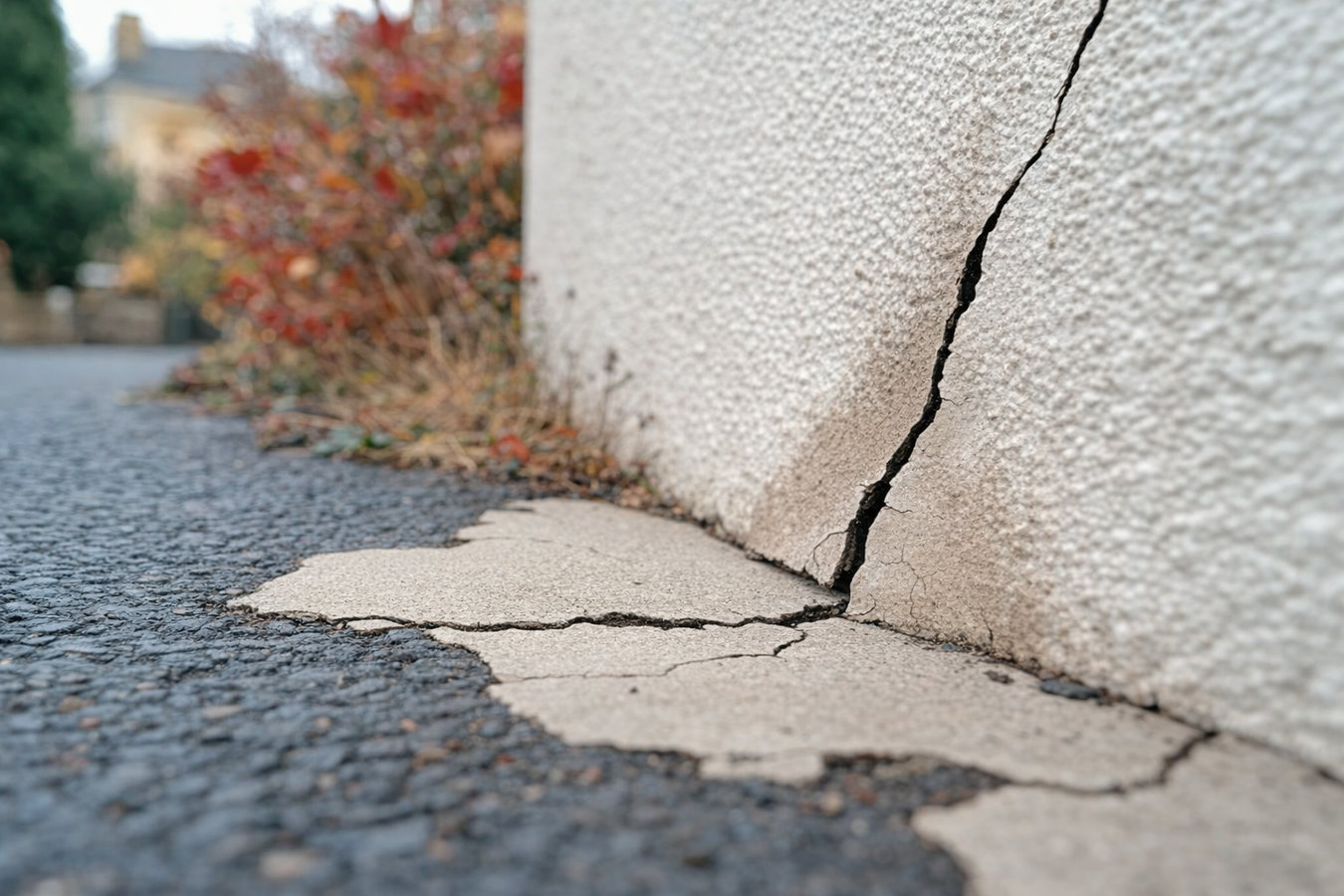
Hairline cracks are common and often harmless. But cracks wider than a quarter-inch, diagonal cracks, or any crack where one side sits higher than the other are signs of real movement. In Pico Rivera, clay soils expand and contract every year, and these cracks often appear or worsen in late spring after the wet season ends.
If you place a marble on your floor and it rolls on its own, or if you feel a clear slope walking from room to room, the slab beneath you has settled unevenly. This is especially common in Pico Rivera homes built in the 1950s and 1960s, when original soil preparation was often minimal. An uneven floor puts stress on walls and plumbing over time.
When winter rains pool against your foundation instead of draining away, they saturate the soil directly beneath your slab. Repeated saturation and drying erodes soil support and leads to settling. If water sits against your foundation for hours after a storm, that is both a warning sign and a contributing cause worth addressing before the next rainy season.
We offer two proven lifting methods depending on your situation and budget. Traditional mudjacking pumps a cement-and-soil mixture under the slab through small drilled holes, filling the void and pushing the concrete back to level. It is cost-effective for larger areas and has a long track record on the postwar-era slabs common throughout Pico Rivera. After the repair, if you need concrete cutting for drainage or utility access, our concrete cutting team handles that work with the same precision.
Polyurethane foam injection uses a lightweight expanding foam instead of a slurry. The foam cures in about 15 minutes rather than the 24 to 48 hours mudjacking requires, making it a strong choice when you need the area back in service quickly. Both methods leave patch holes that are filled smooth before the crew leaves. We assess your slab, explain which method fits your specific conditions, and give you a written estimate before any work begins.
Best suited for homeowners with larger sunken areas or tight budgets who want a proven, durable repair at a lower cost per square foot.
Ideal for jobs where fast curing matters - high-traffic areas, business premises, or homeowners who need the repaired surface back in service the same day.
Driveways, patios, interior floors, garage slabs - any residential concrete surface that has sunk and needs to be brought back to level.
For homeowners who want the job done by the book, including permit application, scheduling the city inspection, and keeping your paperwork clean for a future sale.
Pico Rivera was built out rapidly between the late 1940s and the early 1970s, and most of that construction happened before modern soil compaction standards were in place. Homes here sit on alluvial clay deposited by the San Gabriel and Rio Hondo rivers - soil that swells when wet and contracts when dry. Every wet winter followed by a dry summer is another round of movement beneath a slab that was poured over ground that was never adequately prepared. The Whittier Narrows fault also runs close to the city, and the minor tremors that come with living in the Los Angeles basin gradually loosen soil over time. If your home was built before 1970, the foundation settling you are seeing is not unusual - it is the expected result of decades of these conditions stacking up. Homeowners in Downey and Norwalk deal with the same clay soil and postwar construction patterns, and we work in both cities regularly.
Pico Rivera also has its own permit requirements for structural foundation work through the City Building and Safety Division. We know that process, we pull the permits ourselves, and we schedule any required city inspections. The permit documentation stays with the property - which matters when you eventually sell, because unpermitted foundation work can surface as a disclosure problem that delays or kills a deal. Getting the paper trail right from the start is part of doing the job right.
We respond to every inquiry within one business day. Tell us where the problem is and how long you have noticed it, and we will schedule a free on-site visit - no commitment required.
We walk the affected areas with you, measure how much the slab has dropped, and probe the soil to understand what is happening underneath. You get a written estimate with a clear scope before we ask you to decide anything.
If a City of Pico Rivera permit is required - and for structural foundation work it usually is - we handle the application. This typically adds a few days, but it protects your investment and keeps your home records clean.
The crew drills small holes, pumps material until the slab is level, and fills every patch hole flush before leaving. We walk the repaired area with you to confirm the surface feels right and give you curing instructions for the specific method used.
Free on-site assessment. Written estimate before any work begins. No pressure to decide on the spot.
(562) 271-1480The clay-heavy alluvial soils beneath Pico Rivera homes behave differently than sandy or loamy soils - they expand and contract with every wet-dry cycle. We account for that movement when planning a lift, which is why our repairs hold up through multiple rainy seasons.
We pull every required permit through the City of Pico Rivera Building and Safety Division and schedule any required inspections. You do not navigate the building department yourself. The permit paperwork stays on file with your property for future buyers.
We are based in Pico Rivera and work across 12 cities in the San Gabriel Valley and Southeast LA. That local footprint means we understand the soil, the permit offices, and the postwar housing stock that makes up most of our work. According to the{" "}Concrete Foundations Association, contractors who specialize in local conditions consistently produce better foundation repair outcomes.
We visit your property, assess the situation, and give you a written estimate that covers the lift, patching, permit fees, and any debris removal. The number on the estimate is the number on the invoice - no vague line items, no last-minute additions.
These are not marketing promises - they are the specific things homeowners in Pico Rivera tell us matter most when they are trying to decide who to trust with their foundation. We earn that trust by being straightforward from the first call through the final inspection.
Precision cuts through existing slabs for drainage, utility work, or section removal - a common companion to foundation repairs.
Learn moreWhen a slab is too far gone to raise, we pour a new one built to current California standards for soil and seismic conditions.
Learn moreCall Pico Rivera Concrete today for a free on-site estimate - Pico Rivera winters are hard on settling slabs, and catching the problem early is always less expensive.